

Commentary
James D.J. Brown
{
  "authors": [
    "James D.J. Brown"
  ],
  "type": "commentary",
  "blog": "Carnegie Politika",
  "centerAffiliationAll": "",
  "centers": [
    "Carnegie Endowment for International Peace",
    "Carnegie Russia Eurasia Center"
  ],
  "englishNewsletterAll": "",
  "nonEnglishNewsletterAll": "",
  "primaryCenter": "Carnegie Russia Eurasia Center",
  "programAffiliation": "",
  "regions": [
    "Russia",
    "Japan"
  ],
  "topics": [
    "Foreign Policy",
    "Security",
    "Global Governance"
  ]
}
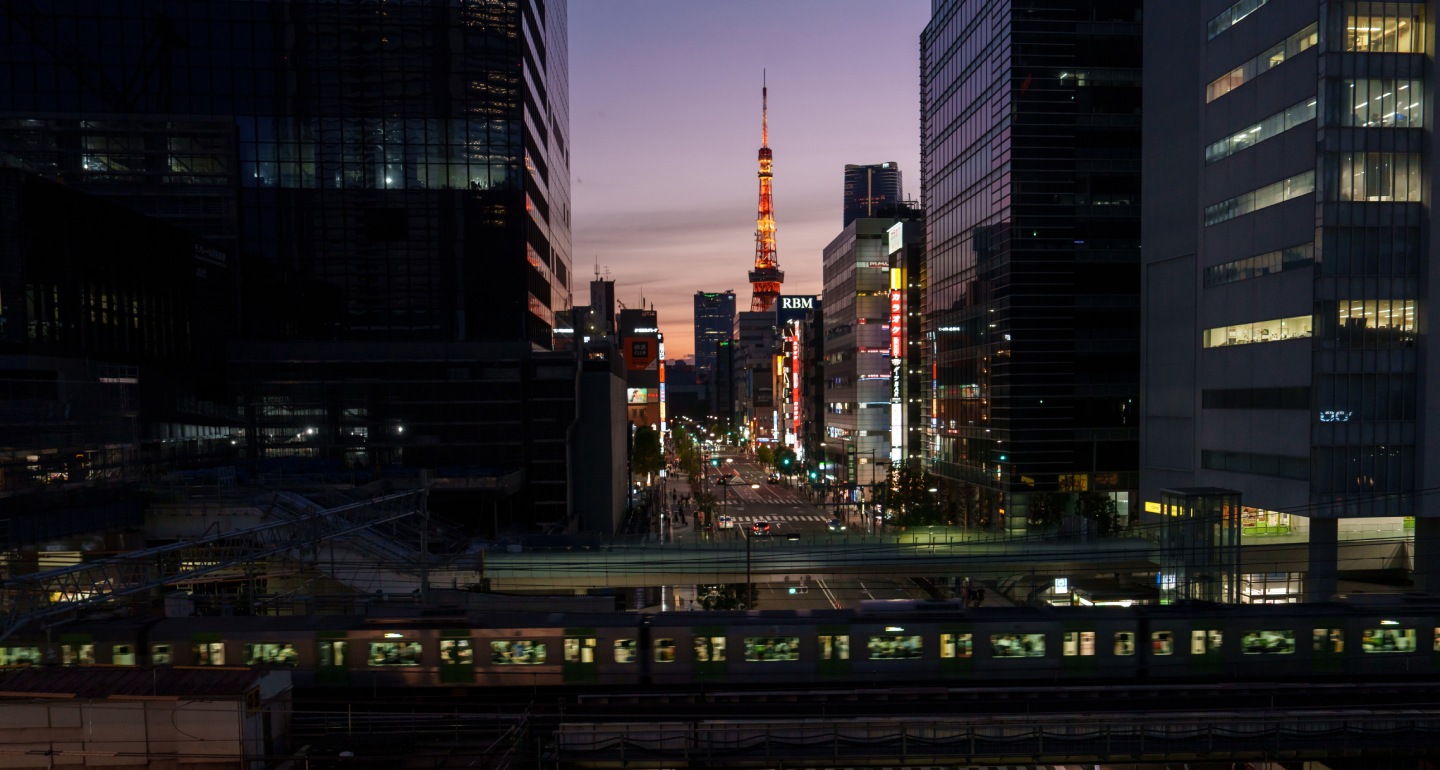
Source: Getty Images
The truth is that Japan’s government is seeking a degree of reengagement but at a vastly reduced level than under Abe. Most significantly, Japan has shown no willingness to ease sanctions.
Since the start of Russia’s full-scale invasion of Ukraine in February 2022, relations between Japan and Russia have been in the deep freeze. Neither the countries’ leaders nor their foreign ministers have spoken by phone since before the war, let alone met in person. Japan has also imposed wide-ranging sanctions on Russia, resulting in a decline in bilateral trade from almost $20.8 billion in fiscal 2021 to just $7.6 billion in fiscal 2025.
In recent days, however, cracks in the ice have begun to appear, leading to speculation that some life may be returning to Russia-Japan relations. On May 3–5, Suzuki Muneo, a veteran member of parliament from the ruling Liberal Democratic Party (LDP), visited Moscow to meet with Russian Deputy Foreign Minister Andrei Rudenko. The two discussed the possibility of a meeting of foreign ministers in July on the sidelines of the ASEAN summit in the Philippines.
Just a few days later, on May 11, Mikhail Shvydkoi, President Vladimir Putin’s special representative for international cultural cooperation, presided at the opening gala in Tokyo of the official Festival of Russian Culture in Japan. The most prominent guest on the Japanese side was Abe Akie, the widow of former prime minister Abe Shinzo, who spent much of his time in power promoting cooperation with Russia. Although supposedly visiting Japan as a cultural envoy, Shvydkoi also discussed bilateral energy cooperation with Suzuki at Japan’s parliament on May 12 and met Funakoshi Takehiro, Japan’s administrative vice foreign minister.
In addition to this political maneuvering, on May 4, Japan took delivery of a shipment of oil from Russia’s Sakhalin-2 project, something it has rarely done since 2022. Furthermore, Japan’s Ministry of Economy, Trade, and Industry (METI) confirmed that it is sending a delegation of trade officials, most likely accompanied by representatives of Japanese business, to Moscow at the end of May.
This represents a real stirring of activity after four years in which relations have been in bad-tempered hibernation. It is driven by two factors, both connected to the United States.
First, U.S. President Donald Trump’s catastrophic decision to attack Iran in February has once again exposed Japan’s energy insecurity. Prior to the conflict, around 70 percent of Japan’s oil imports came via the Strait of Hormuz. The potentially long-term closure of this key maritime chokepoint as a result of the war has forced Japan to scramble for alternative supplies, including from Russia.
The second factor is the Trump administration’s own engagement with the Russian leadership. During the Alaska summit between Trump and Putin in August 2025, the potential return of U.S. energy firms to Russia was discussed. More recently, U.S. Secretary of State Marco Rubio held a phone conversation with his Russian counterpart, Sergey Lavrov, on May 5.
Japan often takes its lead from its key ally, the United States, when it comes to foreign policy. Given Trump’s own positive attitude to Putin, Tokyo can feel confident that it will not be subjected to criticism from Washington if it explores a partial reengagement of its own.
However, anyone anticipating a full-scale return to the Abe era will be sorely disappointed. First, the strategic calculation for Japan has changed. As Abe explained in an interview after his retirement, the post-2012 engagement with Russia was “a strategic decision, Russia should not be driven to the Chinese side.” In other words, it was realpolitik. With China identified as the main threat to Japan, there was clear logic in trying to drive a wedge between Beijing and Moscow, thus preventing them from forging a united front.
Although this approach made theoretical sense and Abe pursued it doggedly, it ultimately achieved nothing. Having so clearly failed once, it is unlikely that the Japanese leadership will make the same mistake twice, especially since the Russia-China partnership is so much closer now, making the prospect of Japan successfully separating the two even more implausible.
A second reason is the obvious point that Putin’s Russia is a much less acceptable partner than it was during Abe’s premiership due to the invasion of Ukraine, which has contributed to an intensification of negative attitudes among the Japanese public. A survey conducted by the Japanese Cabinet Office in late 2025 found that 93.2 percent of Japanese respondents do not feel affection for Russia.
This hostility has been aggravated by Moscow and Pyongyang signing a Comprehensive Strategic Partnership Treaty in June 2024. Japan considers North Korea a grave threat to national security due to its nuclear and ballistic missile capabilities, as well as its history of abducting Japanese citizens. There are fears in Tokyo that military cooperation with Russia may enhance North Korea’s technical capabilities and embolden its leadership.
Third, those in Japan advocating closer relations with Russia are much weaker than during the Abe era. Abe himself was the most powerful advocate of engagement, but he was assassinated in July 2022, less than two years after leaving office.
Current prime minister Takaichi Sanae, although a protégée of Abe, seems much more hostile, or at least indifferent, to Russia. When sanctioned by Moscow in May 2022 for her support of sanctions, she responded defiantly, stating “Fine by me! It’s not like I’d go even if they invited me!”
The most visible advocate of reengagement is the aforementioned Suzuki Muneo. Suzuki had been in the political wilderness after being forced out of the LDP and serving time in prison for corruption. Abe resurrected his career by appointing Suzuki as an unofficial advisor on relations with Russia.
Suzuki is a member of the upper house, but he is not a leading political figure and tends to exaggerate his influence. He only narrowly secured his seat in the July 2025 election and has not persuaded Takaichi to revive Abe’s practice of regularly meeting with him to discuss Russia policy.
The other key figure on Russia relations in Japan is Imai Takaya. A former METI official, Imai served as executive secretary to Prime Minister Abe. Under Takaichi, he has returned as special advisor to the cabinet. Like Suzuki, Imai is a tireless advocate of engagement with Moscow, primarily because of his belief in the importance of Russian energy for Japan’s economy. Imai almost certainly played a prominent role in pressing METI to send a business delegation to Moscow at the end of May.
However, Imai’s relationship with Takaichi is more distant than it was with Abe. Some media report “an irreparable rift” between the two following a heated argument over Middle East policy. Takaichi apparently intended to sack Imai but was talked out of doing so to avoid breaking with the legacy of Abe, who is regarded as a sacred figure by many in the LDP.
Nor is Suzuki and Imai’s pro-Russian cause helped by the lack of enthusiasm from Japanese business. When METI approached Japanese businesses to discuss the idea of sending a delegation to Moscow, many responded negatively, fearing reputational risk. The ministry has thus been forced to play down the business delegation, insisting that it is merely to support Japanese firms that have continued to operate in Russia, rather than to tout for new business.
The truth is that Japan’s government is seeking a degree of reengagement but at a vastly reduced level than under Abe. Most significantly, Japan has shown no willingness to ease sanctions. This was reaffirmed by Foreign Minister Motegi Toshimitsu on May 12 when he condemned Russia’s invasion of Ukraine as “an outrageous act that shakes the very foundations of the international order” and said that Japan’s position on sanctions “remains unchanged.” This enduring commitment is explained by Japan’s fear that if Russia is seen to succeed in Ukraine, this could embolden China to try to change the status quo by force in East Asia.
The main objective of Japan’s limited reengagement is to ensure the continuation of energy supplies from Russia. Even since 2022, Japan has continued to import around 9 percent of its liquefied natural gas from its northern neighbor. Imports of Russian oil, however, have been minimal. The United States’ war against Iran has forced Japan to consider restarting larger imports of Russian crude.
Separately, Japan’s government is eager to restart visa-free visits to the Russian-held Southern Kuril Islands, which are claimed by Japan as its Northern Territories. These visits are primarily for former Japanese residents who were expelled after the islands were occupied by the Soviet Union at the end of World War II. The visits were held annually, but have been suspended since 2020, first due to the Covid pandemic and now as a means for Moscow to punish Japan for opposing the war in Ukraine.
Japan’s government hopes to use a meeting of foreign ministers (or deputy foreign ministers) to lobby for a resumption of these visits on humanitarian grounds. This is a pressing matter because the number of surviving former residents has fallen below 5,000 and their average age is over ninety.
These hopes may be frustrated, since the Russian side has consistently insisted that concessions are dependent on Japan first dropping its “hostile policies,” i.e., sanctions. Since that is not something the Takaichi administration is willing to do, the current brief period of warmth may soon revert to the preceding chill.

Professor of Political Science at Temple University
Recent Work
James D.J. Brown
James D.J. Brown
Carnegie does not take institutional positions on public policy issues; the views represented herein are those of the author(s) and do not necessarily reflect the views of Carnegie, its staff, or its trustees.
Azerbaijan’s relations with the EU appear to be going from strength to strength after several years in the deep freeze following the military escalation in Karabakh in 2023 and Azerbaijan’s bitter fallout with France and several other EU member states.

Shujaat Ahmadzada
The cost of air defense has become an unregistered tax on revenue for businesses. While military rents are consolidated in the federal budget, the costs of defense are being spread across the balance sheets of companies and regional governments.

Alexandra Prokopenko
Governments in Estonia, Latvia, and Lithuania want to ensure that a U.S. military withdrawal would not leave them dangerously exposed to a Russian attack.

Sergejs Potapkins

Anger over online restrictions has led to a surge in support for the New People party, which has replaced the Communists as Russia’s second most popular political party.

Andrey Pertsev
The Russian regime is now visibly motivated by fear.

Alexander Baunov