

Commentary
Michael Young
{
  "authors": [
    "Michael Young"
  ],
  "type": "commentary",
  "blog": "Diwan",
  "centerAffiliationAll": "",
  "centers": [
    "Carnegie Endowment for International Peace",
    "Malcolm H. Kerr Carnegie Middle East Center"
  ],
  "englishNewsletterAll": "",
  "nonEnglishNewsletterAll": "",
  "primaryCenter": "Malcolm H. Kerr Carnegie Middle East Center",
  "programAffiliation": "",
  "regions": [
    "Lebanon",
    "Levant",
    "Israel"
  ]
}
Source: Getty
While armed forces commander Rudolph Haykal’s caution is understandable, he is in a position to act, and must.
For months, detractors of Lebanon’s government and army have accused both, perhaps unfairly, of pussyfooting on Hezbollah’s disarmament. It’s now apparent that the party had many more weapons and resources than initially believed, and its combatants continued to receive salary payments from Iran. In other words, had the armed forces tried to forcibly seize the party’s arsenal, it would have faced major resistance, made insurmountable had the Shiite community rallied to Hezbollah’s side, which would certainly have been the case.
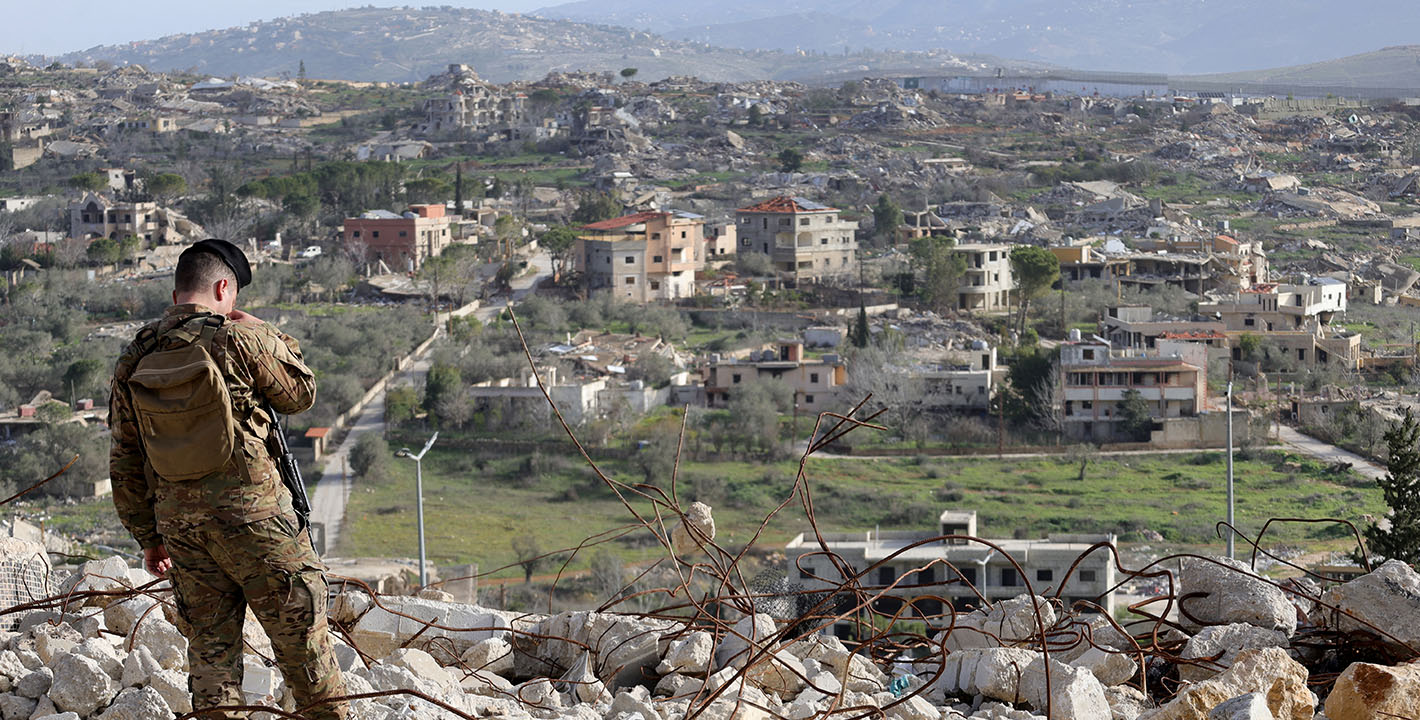
As Israel advances toward the Litani River, it’s only a matter of time before Hezbollah will be forced to regroup in the area between the Litani and the Awwali River at the entrance of Sidon. The Lebanese army, which understandably has sought to avoid armed clashes with Hezbollah in the past, will have no excuse if it fails to act in a proactive way to secure this area first. The armed forces’ commander, Rudolph Haykal, who to his credit is someone risk averse, should not let this quality mutate into fatal passivity. There is much the army can do, while avoiding a head-on battle with Hezbollah.
Some Arab diplomats believe the war in Lebanon will go on for another two months, lasting a month longer than the U.S. and Israeli war against Iran. They also argue that within this timeframe, Hezbollah will gradually run down its supplies of weapons, which the party cannot adequately replace because its resupply line through Syria has been significantly reduced. If that assessment is correct, we can see that Hezbollah’s primary purpose in this war is to buy Iran time to secure a satisfactory outcome for itself.
It’s no secret that Haykal and Prime Minister Nawaf Salam did not see eye to eye when the government took the decision almost a month ago to declare Hezbollah’s military and security activities illegal. The army commander allegedly told the president that he did not have the means to implement the decision because, among other things, his units were underpaid and the state could not financially support the families of dead servicemen. A blunter reason is that the army cannot militarily defeat Hezbollah, and if it tried to do so, it would cause tremendous damage to itself.
Haykal received a great deal of blame from the armchair generals who seem to pullulate between Beirut and Washington. Some demanded that he be fired and replaced with someone with more teeth. Others accused him of not wanting to alienate Hezbollah, because in five years’ time he will be a natural presidential candidate. Still others said he was simply reflecting an institution that retains suspicious ties with Hezbollah. These stock explanations aside, the reality is that Haykal probably saw quite clearly that any confrontation with the party would morph into a confrontation with the Shiite community as a whole, and that there was no way for the army to prevail under such circumstances.
As an astute observer of the army recently remarked to me, Haykal, and with him Joseph Aoun, are from a generation of officers whose careers began during the pulverizing conflict with the Lebanese Forces in 1990. These are men conscious of the army’s limitations in internal conflicts with sectarian militias. When armies meet resistance, what happens? They stop and start bombing the areas they are trying to enter, which means they bomb their own citizens, causing horrendous numbers of casualties and considerable resentment. That’s what happened in early 1984, when the army surrounded Beirut’s southern suburbs to defeat the Amal Movement. Weeks later, on February 6, there was a militia uprising in West Beirut that essentially signaled the end of Amine Gemayel’s term as an effective president.
Before this latest war with Iran started, the army was preparing to initiate the second phase of its plan to secure a state monopoly over weapons. Many people may scoff at a plan that advanced very gingerly and that, ultimately, did little to contain Hezbollah or the Iranian officers leading its combat units. Yet today, with Israel pushing its forces to the Litani River, the area stretching north of that line to Sidon will take on great significance as it emerges as a potential new frontline for Hezbollah.
That is why Haykal, and the government in general, must quickly come up with a plan to ensure it is not Hezbollah that expands its military networks into that area, but the state. This will hardly be easy, as Hezbollah is already present there. However, the government took a far-reaching decision to declare Hezbollah’s military and security activities illegal, which was approved by most Shiite ministers, and there is a clear majority in the government that believes the ongoing war in Lebanon was provoked by Iran. This forms a basis on which the army can act.
There is some ambiguity over this territory, however. The Israelis have called for the evacuation of the areas north of the Zahrani River. What the Lebanese government must try to do is to reach agreement for a military presence south of the Zahrani, stretching to the Litani, using the United States as a mediator in talks with Israel. This will require imaginative diplomacy, and could be justified internally as an effort to limit the areas into which the Israelis might advance. By moving into the zone north of the Litani, the government would be in a position to neutralize that zone, or try doing so, and prevent rocket launches from there against Israel, while detaining Hezbollah members moving south. The aim would be to establish an area in which the state alone has the right to hold weapons, even if this risks localized clashes if Hezbollah pushes back. One thing the party can’t afford today is an escalation in tensions with the army while it is fighting Israel. That’s why the army must deploy its best-trained units to this area, not ordinary conscripts.
One can refine such a plan in multiple ways. This can include a civilian component to relieve the inhabitants of the area north of the Litani, for example by repairing damaged infrastructure. It can involve coordinating with the Mechanism, which remains the formal venue for overseeing implementation of United Nations resolutions on Lebanon, and which the speaker of parliament, Nabih Berri, wants to revive as a forum for contacts with Israel. What is imperative, however, is to prevent this area from being fully ceded to Hezbollah in its conflict with Israel, because if the Israelis decide to also make the region unlivable, it could push the Shiite population into non-Shiite areas of Mount Lebanon, generating domestic discord that undermine what remains of the stability of the state.
Rudolph Haykal is right in pushing back against ill-advised efforts to turn the army into a silver bullet to resolve the state’s Hezbollah problem, because no one will defend the armed forces once they face setbacks. But he must preserve the credibility of his institution by preparing plausible plans that are in line with the decisions of the government, and interpret his mandate with imagination, otherwise his role will become redundant. The place to start is the area between the Litani and Awwali, the most critical location in Lebanon today.

Editor, Diwan, Senior Editor, Malcolm H. Kerr Carnegie Middle East Center
Michael Young is the editor of Diwan and a senior editor at the Malcolm H. Kerr Carnegie Middle East Center.
Recent Work
Michael Young
Michael Young
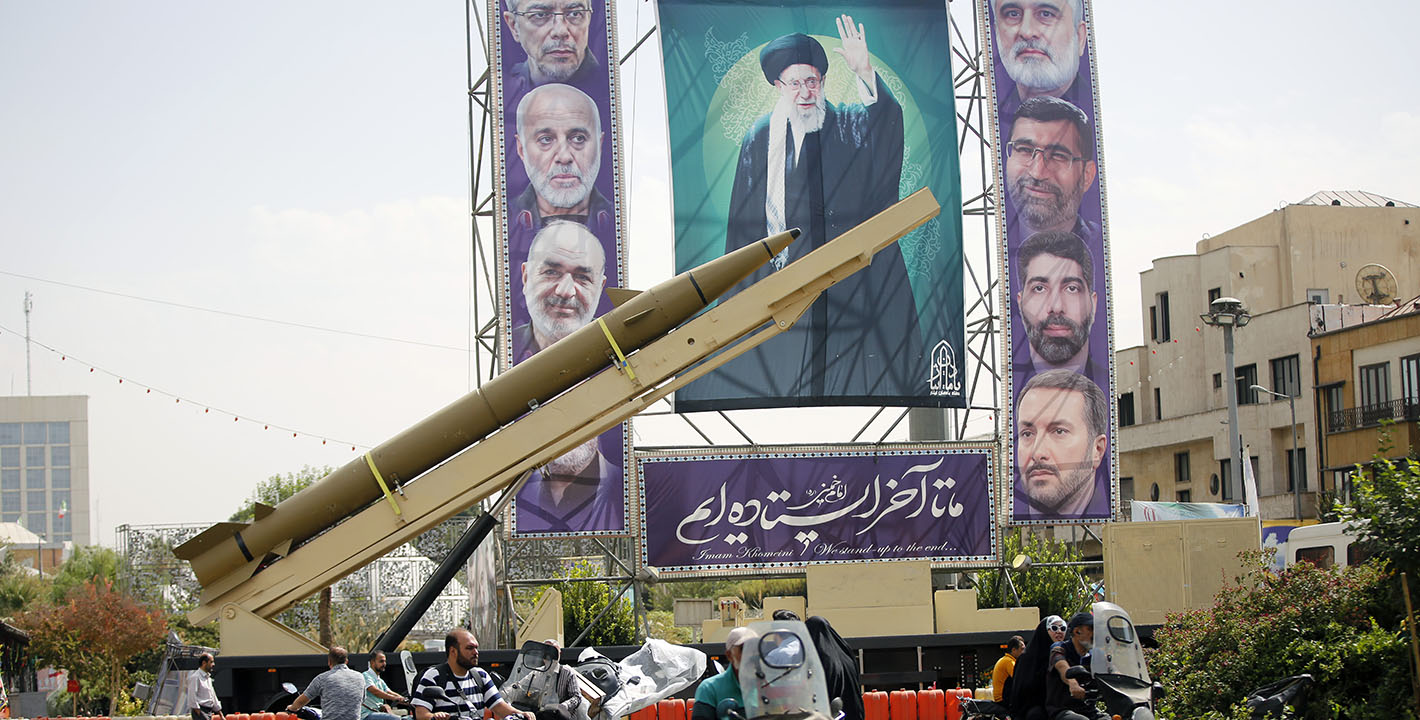
In an interview, Hamidreza Azizi discusses how Tehran has adapted in real time to the conflict with the United States and Israel.
Michael Young
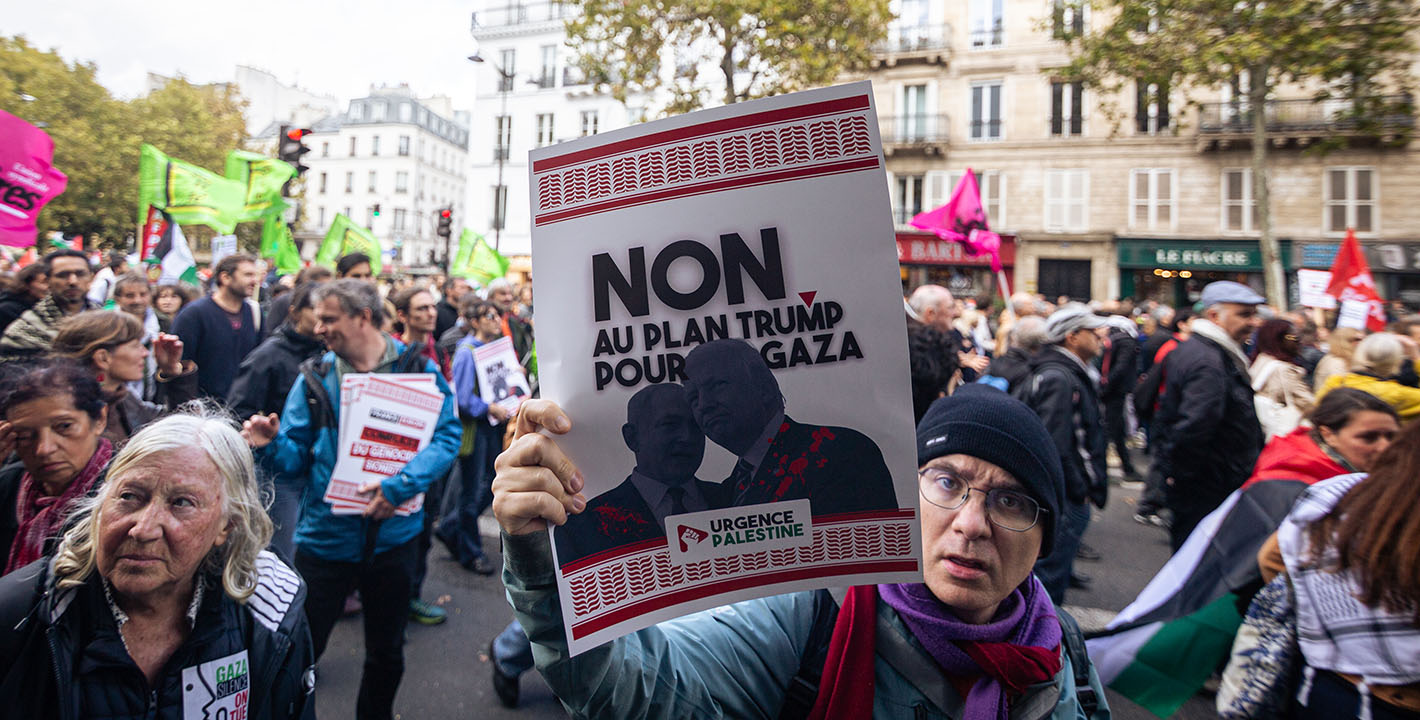
The simple conclusion is that the scheme will bring neither peace nor prosperity, but will institutionalize devastation.

Nathan J. Brown
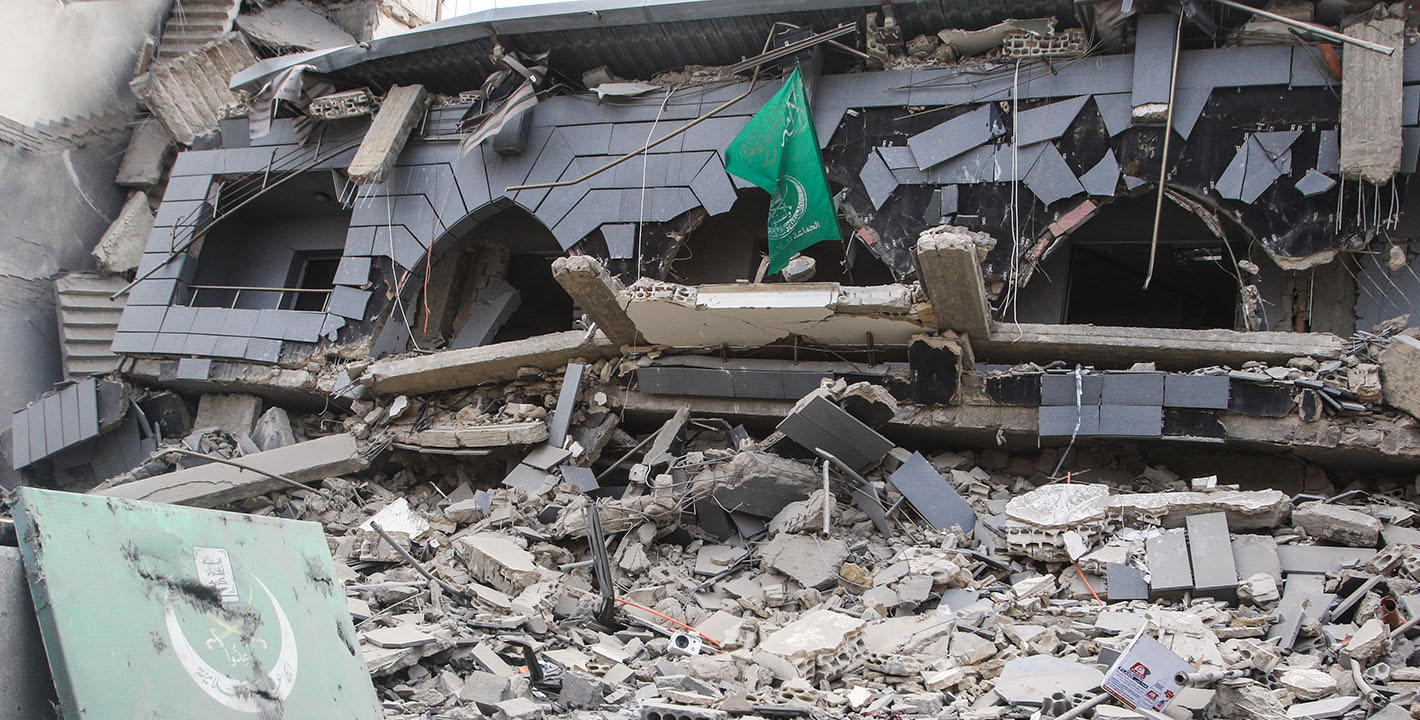
The Jamaa al-Islamiyya is the local Lebanese dimension of a broader struggle involving rival regional powers.

Issam Kayssi
In an interview, Andrew Leber discusses the impact the U.S. and Israeli war against Iran is having on Arab Gulf states.
Michael Young
In an interview, Sergei Melkonian discusses Armenia’s and Azerbaijan’s careful balancing act among the United States, Israel, and Iran.

Armenak Tokmajyan