

Commentary
But their "principal to principal" model will only be as effective as the political strength of each leader back home.
Damien Ma

Source: Getty
China’s Ministry of Public Security is often portrayed as a domestic law enforcement agency, but it is also a global security actor. This paper explores how MPS has used international law enforcement and security cooperation agreements—over 200 since 2006—to advance China’s vision of security in a changing global environment.
The Ministry of Public Security (MPS) is the main domestic law enforcement agency in the People’s Republic of China (PRC)—but under President Xi Jinping, it has also become a major global security actor. MPS and its personnel engage in a wide range of security diplomacy, outreach, and police training activities around the world today. Below, we examine an important tool that MPS has used to expand its international outreach: police and security cooperation agreements.
Since 2006, MPS has signed at least 205 policing and security cooperation agreements with as many as seventy-four different countries, as well as Taiwan. Of these agreements, 170 have been bilateral, signed with sixty-one different countries. China’s top bilateral partners in terms of formal cooperation agreements are Vietnam, Cambodia, Myanmar, and Russia; the United States has also signed several agreements with MPS, including on counterdrug and border security cooperation. MPS has signed an additional thirty-five security cooperation agreements to partner with countries through multilateral security forums, including the Shanghai Cooperation Organization (SCO), the Association of Southeast Asian Nations (ASEAN), the Lancang-Mekong Integrated Law Enforcement and Security Cooperation Center (LMLECC), the European Union (EU), and the International Criminal Police Organization (INTERPOL). Signing of police security cooperation agreements peaked around 2010, 2016–2018, and again after 2024 as China emerged from its Zero COVID isolation.
China’s internal security cooperation agreements with foreign counterparts cover a wide range of topics, most of which align with the nontraditional and regime security threats emphasized in Xi Jinping’s comprehensive national security concept and the Global Security Initiative (GSI). The largest number of agreements discuss combating transnational crime, counterdrug cooperation, and counterterrorism cooperation, followed by immigration and border control and police force capacity-building. Although MPS has signed formal security cooperation agreements with fewer countries than the number of countries to whom it has provided police training (74 versus 138 countries1), there is a fairly high correlation between the countries that have these security cooperation agreements, those with whom Beijing pursues high-level internal security diplomacy, and China’s foreign police training programs. This suggests that MPS security cooperation agreements are one piece of a wider toolkit that China’s internal security apparatus has used to cooperate with foreign counterparts to advance Beijing’s vision of security in a rapidly changing global security environment.
This paper draws on a newly compiled dataset of over 200 policing and internal security cooperation agreements over a twenty-year span from 2006 to 2025. Since 2006, China’s Ministry of Public Security (MPS) has signed 170 publicly observable bilateral policing and domestic security cooperation agreements with sixty-one different countries, and another thirty-five multilateral security agreements through regional and international organizations and forums—resulting in 205 agreements that involve at least seventy-four countries plus Taiwan.2 We compiled data on these agreements from official signing ceremony announcements, press releases, and full-document releases on the MPS website, as well as previously published reports and news sources.3
Figure 1 shows the countries with whom the Ministry of Public Security has signed security cooperation agreements since 2006:
MPS has signed the most security agreements in Southeast Asia, followed by Eastern Europe and the Caucasus (dominated by Russia), East Asia, Europe, and Central Asia. The countries with which MPS has the highest number of bilateral security cooperation agreements include Vietnam, Cambodia, Myanmar, and Russia.
The analysis in this paper is primarily on bilateral and multilateral agreements signed by the PRC Ministry of Public Security. Other actors in the Chinese political system, however, also pursue security cooperation agreements. We found several agreements signed by the Ministry of Foreign Affairs, provincial public security bureaus, and functional bureaus within the Ministry of Public Security (for example, Narcotics [公安部禁毒局], Exit-Entry Administration [安部出入境管理局], and others), as well as additional agreements signed by Chinese embassies for specific facilities or project protection.4 If this broader set of security-related cooperation agreements are included, the total rises to at least 219 agreements, potentially more.
Most MPS cooperation agreements emerge as deliverables from meetings between the leaders of China’s internal security apparatus and their foreign counterparts,5 and take the form of signed documents regarding internal security cooperation. The specific nomenclature used by China’s Ministry of Public Security for its “cooperation documents” (合作文件) varies: Approximately half are termed protocols (协议, including both 协议 and 协议书); accords (协定, including those listed as 协定, 协定书, and 合作协定); or memorandums of understanding (谅解备忘录).6 Additionally, “meeting minutes” (会议纪要) make up over a quarter of all cooperation agreements; despite the English translation of this term, meeting minutes appear to contain agreement on salient and substantive cooperation and to be treated as significant forms of agreement by MPS itself.7 (No full-text “meeting minutes” document is publicly available, but one description of the content demonstrates that these can contain procedures and details for upcoming cooperation activities.8) A variety of other miscellaneous or one-off document types—including supply hand-over documents (物资交接书), cooperation plans (合作安排), and action plans (行动方案)—make up less than 20 percent.
The overlap between security cooperation agreements, police diplomacy, and foreign police training suggests that these agreements are part of a wider toolkit used to advance Beijing's vision of security
While our data represent the most comprehensive accounting of China’s foreign policing and internal security cooperation agreements to date, there is some gap between the number of agreements we located and the actual number that may have been signed, based on select occasions when the Ministry of Public Security has provided its own top-line figures. In 2008, MPS reported a cumulative 141 cooperation agreements with fifty-one countries (including some signed outside of the timeframe examined here); in 2023, Chinese sources reported “over 400 intergovernmental and interministerial law enforcement cooperation agreements” with 110 countries.9 From 2008 to 2018, MPS’s Office of Government Disclosure (信息公开办公室) published annual figures that lead to a total count of 126 “international policing and law enforcement cooperation agreements” (国际警务执法合作协定),10 while our data for the same period result in a total count of 122 agreements. Our data therefore appear to capture most, but not all, of the cooperation agreements signed by MPS between 2006 and 2025.
Formal security cooperation agreements are one form of China’s growing outreach and effort to position itself as a global security provider.11 MPS has signed formal security cooperation agreements with fewer countries than those to whom it has provided police training: We identified seventy-four countries with formal security cooperation agreements, as compared to over 130 countries that have received police training from China in roughly the same period.12 Figure 2 shows the comparison.
MPS began signing most of its (publicly known) security cooperation agreements in 2006, when it signed eleven bilateral agreements. Agreement signings peaked in 2010, with twenty-three agreements concluded that year. This is also around the time when PRC training of foreign police began to rise significantly, indicating that such agreements may have been a foundation for China’s early police training programs.
In many cases, China signed multiple agreements with a given country between 2006 and 2025. Figure 3 shows the number of bilateral Chinese police and security cooperation agreements each year since 2006, distinguishing between agreements with new signatories and renewal or repeat agreements with previous partners.
Since the launch of the Global Security Initiative in April 2022, China’s MPS has signed bilateral agreements with five new countries (Burundi, Greece, Hungary, Mexico, and Rwanda). It has also signed agreements with thirteen previous partners (Belarus, Cambodia, Egypt, Indonesia, Iran, Kazakhstan, Laos, Malaysia, Myanmar, South Korea, Tajikistan, Uzbekistan, and Vietnam).
China’s pursuit of police cooperation agreements parallels the significant expansion of other forms of global public security cooperation with foreign counterparts during this period. This broader menu of efforts by China’s internal security apparatus includes rebranding and upgrading the Lianyungang Forum to the Global Public Security Cooperation Forum (Lianyungang);13 engaging in robust patterns of diplomatic travel and exchange with senior foreign counterparts;14 and resuming foreign police training efforts that had been largely paused during the COVID-19 pandemic.15
The majority of MPS security cooperation agreements were signed, on the Chinese side, by the minister of public security (部长): 107 of 170 bilateral agreements, or 62.9 percent. An additional thirty-seven (21.8 percent) were signed by a vice minister of public security (副部长).16 In the Chinese political system, both the minister of public security (公安部部长) and the executive vice minister of public security (常务副部长) are considered “ministerial-level positions” (正部长级).17 We identified six agreements signed by the executive vice minister, meaning that a total of 113 bilateral agreements (66.5 percent) were signed by an MPS official at the ministerial level.
Our data show that over half of MPS’ security cooperation agreements were signed with Ministries of the Interior, Internal Affairs, or Home Affairs, Ministries of Public Security, or Ministries of State Security.
Each of China’s recent ministers of public security has participated in signing these security cooperation agreements. Meng Jianzhu (孟建柱), who was minister of public security from 2007–2013 (and who became head of the Central Political-Legal Commission in November 2012), signed forty-two bilateral security cooperation agreements with his foreign counterparts. Guo Shengkun (郭声琨), minister of public security from 2012 to 2017, signed twenty-eight.18 Zhao Kezhi (赵克志), minister of public security from 2017 to 2022, signed eleven—a lower total that at least partially reflects the drop in China’s global security outreach during the COVID-19 pandemic.19
The current PRC Minister of Public Security, Wang Xiaohong (王小洪), assumed this role in summer 2022, and has signed twenty-one agreements in that capacity through the end of 2025.20 Prior to that, Wang served as the executive vice minister of public security (常务副部长) from 2018 to 2022, during which he signed five agreements.21 (He signed none in his earlier role as an MPS vice minister [副部长, 2016–2018], during which he served concurrently as the head of Beijing’s Public Security Bureau.)
The seniority of the signatories on China’s security cooperation agreements reflects China’s diplomatic weight: 127 of MPS’ 170 bilateral agreements were signed by a minister or ministerial-level counterpart, while fifteen were signed with a deputy or vice-ministerial equivalent.
Who are MPS’ main counterparts in foreign countries? Our data show that over half of MPS’ security cooperation agreements were signed with Ministries of the Interior, Internal Affairs, or Home Affairs (76 of 170, or 44.7 percent),22 Ministries of Public Security (thirty-eight, or 22.4 percent),23 or Ministries of State Security (six, or 3.5 percent). Another eighteen agreements (10.6 percent) were signed with a National Police Agency, and fourteen (8.2 percent) were signed with immigration, border control, criminal investigation, counterterror, or narcotics bureaus.
The seniority of the signatories on China’s security cooperation agreements reflects China’s diplomatic weight: 127 of MPS’ 170 bilateral agreements (74.7 percent) were signed by a minister or ministerial-level counterpart, while fifteen (8.8 percent) were signed with a deputy or vice-ministerial equivalent. Of our 170 agreements, the majority (103 agreements, or 60.6 percent) were signed by ministerial-level officials from both countries, and nine (5.2 percent) were signed by vice-ministerial officials from both sides. PRC vice ministers of public security without (apparent) ministerial rank signed twenty-one agreements (12.3 percent) with higher-ranked, ministerial-level counterparts, while ministerial-level MPS officials signed six agreements with a counterpart at the vice-ministerial level.
China’s police and security cooperation agreements span a broad array of topics. Many focus on the kinds of nontraditional and internal security issues that are emphasized in Xi Jinping’s 2014 comprehensive national security concept, and in his subsequent directive for the internal security apparatus to adopt a “global vision” for its work.24
We examined the topics covered in China’s bilateral public security cooperation agreements, using keywords in titles, official descriptions, news reporting, and full documents (where available). Most agreements mentioned multiple specific topics (93 of 170, or 54.7 percent), while fifty (29.4 percent) mentioned a single topic and twenty-seven (15.9 percent) did not specify a topic or topics (leading us to code them as “generic”). Major topics covered in MPS cooperation agreements included:
The topics most frequently mentioned include transnational crime, counterdrug cooperation, counterterrorism or the “three evils,” immigration and border enforcement, police force capacity-building, and protection of overseas Chinese interests. Many cooperation agreements include groupings of these topics: counterdrug, counterterrorism, and transnational crime, for example, are often discussed in the context of describing the need to build capacity in police forces of countries where China seeks to protect overseas interests.25
Some more specific technical topics are referenced in full-text documents, but are usually not elevated to topline descriptions or news readouts. (Topics that fall in this category include forgery of identity documents and arms/weapons sales and trafficking.) We exclude topics that only appear in full documents given that limited and uneven availability of full-text agreements could lead to biased understanding of where these topics fit in China’s international police cooperation (particularly if sensitive issues appear in full documents but not in public readouts or media coverage of them).
Figure 4 illustrates the distribution of topics in MPS’ bilateral security cooperation agreements since 2006. The size of each node represents the number of agreements each topic is mentioned in. The thickness of the lines reflects how often two topics are mentioned in correlation to each other in the same agreement: Thicker lines show higher correlation between topics, meaning that these topics more frequently appear grouped together in the agreements in our dataset.
The most referenced topic in MPS cooperation agreements is preventing and combating transnational crime, which appears in sixty-nine agreements (40.6 percent). Sixty-one of those mentioned cooperation on at least one other topic, most often counterterrorism or counterdrug work—suggesting that references to “transnational crime” often capture a multifaceted portfolio of law enforcement cooperation between the two countries. The security cooperation agreements that focus on combating transnational crime often discuss concrete steps such as information-sharing,26 joint investigation and evidence collection,27 and fugitive repatriation and extradition.28
The second most frequently mentioned topic is counterdrug cooperation, which appears in sixty-one agreements (35.9 percent). Forty-five of the sixty-one agreements that focused on counterdrug cooperation also mentioned other topics; in addition to transnational crime, they were especially likely to refer to counterterrorism and police force capacity-building. In terms of concrete measures, counterdrug cooperation agreements often discuss combating drug trafficking and stopping illegal drug sales. For example, in 2009, then minister Meng Jianzhu visited Jordan’s former prime minister and the former Jordanian minister of the interior, signing an interagency agreement focused on law enforcement cooperation over counterdrug issues, transnational crime, border enforcement, and counterterrorism, as well as police force capacity-building.29 In 2016, China and Argentina concluded a security agreement aimed combating organized crime, transnational criminal activity, and drug manufacturing and trafficking.30
Counterterrorism was mentioned almost as frequently as counterdrug cooperation, appearing in fifty-seven security cooperation agreements (33.5 percent). (Included in this count are agreements that reference the “three evils,” which is the CCP’s political shorthand reference to “terrorism, separatism, and extremism.”31) Fifty-two of the fifty-seven counterterrorism security cooperation agreements from 2006 to 2025 reference other topics, usually protection of overseas Chinese interests and counterdrug work.
A total of fifty-one agreements (30 percent) between MPS and foreign counterparts discuss security cooperation on immigration and border enforcement. Among the countries that share a border with China, MPS security agreements with India, Kazakhstan, Laos, Mongolia, Myanmar, Nepal, Russia, and Vietnam address immigration and customs control or border enforcement in at least one instance.32 All six MPS agreements with Mongolia discuss secure immigration procedures and border enforcement; four of Nepal’s five agreements mention cooperation on immigration, customs, and border surveillance.
In February 2026, the United States and China held a meeting of the Bilateral Drug Intelligence Working Group, continuing a pattern of joint counternarcotics law enforcement collaboration that has ebbed and flowed at times with the level of tension and cooperation in the overall bilateral relationship.
The United States has also signed multiple agreements with the PRC’s MPS that focus on immigration, border control, and countering drug trafficking. In 2006, for example, former U.S. attorney general Alberto Gonzales signed five memorandums of understanding with former minister of public security Zhou Yongkang (周永康) on topics including counterterrorism, immigration, drug-control, and cybercrime, involving MPS cooperation with the Federal Bureau of Investigation, the White House Office of National Drug Control, and the DHS’ Immigration and Customs Enforcement Bureau.33 In 2011, the Department of Homeland Security (Customs and Border Protection) signed another memorandum of understanding, and the former U.S. attorney general and the former acting secretary of the Department of Homeland Security signed a meeting summary (对话成果清单) of a dialogue on law enforcement and cybersecurity, which also included discussion of narcotics control and repatriation of illegal immigrants.34
Recent law enforcement cooperation between MPS and various law enforcement agencies in the United States has focused particularly on the production and trafficking of fentanyl and other synthetic drugs. In February 2026, the United States and China held a meeting of the Bilateral Drug Intelligence Working Group (which Chinese sources referred to as the eleventh U.S.-China counternarcotics information exchange meeting) in Colorado, continuing a pattern of joint counternarcotics law enforcement collaboration that has ebbed and flowed at times with the level of tension and cooperation in the overall bilateral relationship.35
From 2006 to 2025, MPS also signed at least fifty-two international cooperation agreements (30.6 percent) that discussed bilateral police force capacity-building. (Of these fifty-two, forty-three mentioned other topics, usually the security challenges that police force capacity was being built to address.) Specific cooperative measures discussed in agreements on capacity-building included, but were not limited to, joint police training,36 equipment trade,37 and local police interagency technological and operational support.38
Cooperation on social stability has also been a consistent focus in China’s police and security cooperation agreements over time, with discussion concentrated in Southeast and South Asia.
MPS also signed at least thirty-one agreements (18.2 percent) focused on protection of overseas Chinese interests, which included fortifying security around Belt and Road Initiative (BRI) projects,39 protection of Chinese citizens and tourists abroad,40 and security for Chinese agencies and government personnel.41 Common measures discussed in these agreements included joint interdiction efforts, protection of BRI assets, and extradition.42 In 2015, for example, MPS signed an agreement, now defunct,43 with the Italian national police agency, noting that “to enhance the protection of the safety and security of Chinese citizens residing in or visiting Italy, the Chinese side would dispatch police officers to Italy during peak tourist seasons to conduct joint patrols alongside the Italian police.”44 Subsequent agreements signed with Croatia and Serbia appear to be similar in scope and focus.45 In other cases, security agreements to protect Chinese facilities were signed not by the Ministry of Public Security, but by Chinese embassies and diplomatic posts abroad; one report mentions around forty such agreements with African countries.46
Cooperation on social stability has also been a consistent focus in China’s police and security cooperation agreements over time, with discussion concentrated in Southeast and South Asia. For example, a 2015 joint statement with India’s Ministry of Home Affairs addresses increasing counterterror efforts in light of the Paris attacks, to maintain regional social stability.47
More recently, there appears to have been an increase in agreements aimed at deepening police cooperation on cybercrime and online gambling. These often occurred in the context of MPS efforts to go after so-called “pig-butchering” (杀猪盘) scam networks that were cracked down on inside China, and which subsequently relocated across borders to countries in Southeast Asia, creating new transnational law enforcement challenges.48 MPS sometimes groups references to cybercrime and online gambling together with references to telecom fraud, counterdrug, and counterterrorism in agreements more broadly aimed at countering or combating “organized crime” (有组织犯罪).
Figure 5 shows the distribution of topics covered in MPS cooperation agreements over time. There is no clear shift in topics over time, suggesting that MPS has used these agreements in relatively consistent ways to pursue a diverse array of purposes and areas of cooperation, which is a contrast with some visible differentiation in the topics of cooperation agreements by region.
Table 1 shows the five countries that signed the largest number of security cooperation agreements with MPS between 2006 and 2025: Vietnam, Cambodia, Myanmar, Russia, and the United States. (The next tier includes Laos and Mongolia, with six agreements each.)
In some cases, countries cooperate with MPS on multiple issues by signing a series of agreements that each cover one topic. In other cases, China built security and law enforcement cooperation with other countries by signing an initial agreement that covered multiple topics, and then renewing it. Six of the eight countries with the highest number of MPS cooperation agreements share a border with China and four of the eight are in Southeast Asia; Cambodia, Laos, Myanmar, and Vietnam have all renewed agreements as recently as 2024 or 2025.
As explained below, MPS has tended to use multilateral security cooperation agreements under the Shanghai Cooperation Organization to conduct security cooperation in Central Asia. This distinguishes the form of China’s police security diplomacy in that region from the more bilaterally oriented security diplomacy it conducts in Southeast Asia, though there are agreements with ASEAN and LMLECC that address regional security challenges through a multilateral framework.
There is also topical differentiation between these two peripheral regions. Figure 6 displays the most frequent topics of MPS security cooperation agreements in each region of the world.
In Southeast Asia, China’s public security cooperation agreements tend to focus on transnational crime, counterdrug, and counterterrorism cooperation—while cooperation in Central Asia focuses primarily on counterterrorism and capacity building, with counterdrug cooperation coming third. Regionally distinctive patterns of criminal activity and political instability in neighboring countries create regional and transnational governance challenges that then drive both the form and focus of Chinese security outreach to each region.
MPS signed a total of sixty-four bilateral agreements (37.6 percent) with countries in Southeast Asia. Topics range widely, but focused most on transnational crime and counterdrug cooperation—including joint law enforcement efforts on locating and dismantling telecommunication fraud campuses, online scamming networks, underground gambling operations, human trafficking crime groups, and detecting poppy fields and drug production sites.
Vietnam has by far the highest number of bilateral agreements signed with MPS. Vietnam and China hold an annual meeting on combating crimes (中越两国公安部合作打击犯罪会议) and sign a meeting minute at the conclusion of each.49 Other agreements target more specific cooperation over law enforcement activities that cover multiple individual topics. China and Vietnam are also somewhat unusual in extending their formal cooperation on policing to the subnational level: In 2009, China’s Yunnan Provincial Police and Vietnam’s Lao Cai Provincial Police signed a meeting minute outlining local police cooperation between the two agencies.50
Regionally distinctive patterns of criminal activity and political instability in neighboring countries create regional and transnational governance challenges that then drive both the form and focus of Chinese security outreach to each region.
Agreements signed with Malaysia and Myanmar—typically covering more than one topic—show high consistency in topics between the original agreement and subsequent ones. For Myanmar, this cooperation mainly focuses on counterdrug, anti-human trafficking, and border enforcement.51 For Malaysia, the areas of focus are counterterrorism and telecom fraud. Cambodia has signed a mix of single-topic and multi-topic agreements, concentrated on counterdrug and police capacity-building efforts. Agreements with the PRC MPS’ Laotian counterpart, the Ministry of Public Security, capture a widely varying range of topics, encompassing almost all the categories we’ve identified. This variation shows MPS’ willingness to adapt its security cooperation agreements and efforts to match the security interests of specific bilateral relationships and the demands of partner countries.
The region that has the second highest number of agreements is Eastern Europe and the Caucasus (twenty, or 11.8 percent). Security cooperation agreements with Russia make up half of that total. Many of the agreements with Moscow were single-topic security cooperation agreements over a span of a decade from 2006 to 2015, signed with the Russian Federal Drug Control Service on topics such as illicit drug production and trafficking. Others, typically signed with the Russian Ministry of the Internal Affairs (内务部 in the Chinese agreement), covered multiple topics: combating cyber and transnational crimes, counterterrorism, and immigration and border enforcement. Renewals of these agreements broadened their scope to include counterdrug and cybercrime cooperation, and an additional agreement with the Russian Federal Internal Security Service addressed border defense cooperation. Agreements between MPS and Russian counterparts diminish in frequency after 2015, which may be attributable to the dissolution of one of MPS’ main interlocutors (the Federal Drug Control Service, after drug control moved to a new bureau under the Ministry of Internal Affairs). It may also reflect the fact that high-level diplomacy on internal security cooperation with Russia is sometimes conducted, on the Chinese side, by the head of the Central Political-Legal Commission, who outranks the minister of public security in the party hierarchy. In this case, the lack of formal MPS agreement documents may reflect an elevation of security cooperation, not a downgrade or dissolution of it.52
Agreements that reference police force capacity-building in Europe often focus on Chinese joint patrols with local police, distinguishing them from more comprehensive forms of cooperation.
The regions with the next highest number of formal MPS security cooperation agreements are Europe and East Asia, each with thirteen bilateral agreements (7.65 percent). In each of these two regions, MPS agreements are broadly distributed across a large number of countries. Some of these countries are strong democracies with consolidated rule of law and domestic political systems that likely require police cooperation to be spelled out in formal documents (for example, agreements with Belgium, Netherlands, Spain, Switzerland, and the United Kingdom). Agreements with European countries tend to focus on immigration and border enforcement (seven of thirteen) and transnational crime (seven). Police force capacity-building (five) and counterterrorism (five) are the next most frequently covered topics. Agreements that reference police force capacity-building in Europe, however, often focus on Chinese joint patrols with local police,53 distinguishing them from more extensive and comprehensive forms of cooperation (involving training mechanisms, equipment sales, and operational support) that appear when this term is referenced in cooperation agreements in other regions.
Bilateral agreements with countries in Central Asia (thirteen, or 7.65 percent) mostly concentrate on cooperation to counter the “three evils” (三股势力) of extremism, separatism, and terrorism.54 At least half of the MPS agreements signed with Afghanistan, Kazakhstan, and Uzbekistan covered counterterrorism. The total number of bilateral agreements signed with counterparts in Central Asia is relatively low compared to other regions, which we explain in part by the prevalence of multilateral agreements conducted via the SCO.
In some cases, China describes later agreements as renewals of earlier ones, used to deepen existing cooperation. Other agreements with existing partners are used to target new and emerging public security challenges that have become relevant to both countries. MPS’ cooperation agreements with Mongolia, North Korea, and South Korea have largely consistent topical focuses over time. For example, during their tenures as ministers of public security, Meng, Guo, and Wang each signed security cooperation agreements with Mongolia’s Ministry of Justice and Home Affairs that focused on the “three evils” and border enforcement, suggesting a pattern of sustained cooperation that was targeted on specific areas of shared security interest.
Our data also include one agreement signed between Mainland’s Association for Relations Across the Taiwan Straits and Taiwan’s Straits Exchange Foundation in 2009.55 While the agreement itself was not signed by MPS, given the nature of cross-Strait relations, it was referenced in a subsequent meeting on law enforcement cooperation, held in 2010 between former vice minister of public security Zhang Xinfeng and the Taiwan’s Prosecutors Association.56
The Ministry of Public Security has also signed at least thirty-five multilateral law enforcement and security cooperation agreements, either through major multilateral security forums, or with a bespoke group of countries. These include:
MPS’ multilateral agreements with regional organizations tend to focus on regionally differentiated topics. Perhaps unsurprisingly, seventeen of the twenty-four agreements (70.8 percent) with the SCO address counterterrorism and combating the “three evils,” and thirteen SCO agreements (54.2 percent) also mention counterdrug security cooperation. Three of the four agreements signed with LMLECC mention law enforcement capacity-building and combating telecom fraud, while two mention combating cybercrime and safeguarding social stability. Two of four agreements with ASEAN countries target online gambling operations, and two address efforts to counter human trafficking.
Under Xi Jinping, the Ministry of Public Security has become a major global security actor. Police and security cooperation agreements are important tools used by MPS to build relationships and partner with foreign counterparts around the world.
Since 2006, MPS has signed at least 205 policing and domestic security cooperation agreements with at least seventy-four different countries, as well as Taiwan. Of these agreements, 170 have been bilateral; another thirty-five agreements engage with multilateral security forums, including the SCO, ASEAN, LMLECC, the EU, and INTERPOL. Using these agreements as a measure, China’s top bilateral police-security partners over time have been Vietnam, Cambodia, Myanmar, and Russia. Law enforcement cooperation is also a component of the U.S.-China relationship. Patterns in MPS agreements correlate closely with China’s police diplomacy and foreign police training activity, suggesting their integration in and importance as a tool of China’s broader global security statecraft.
China uses security cooperation agreements under MPS to build cooperation on a wide range of challenges, particularly those aligned with the non-traditional and domestic security threats emphasized in Xi Jinping’s comprehensive national security concept and the Global Security Initiative. These include transnational crime, counterdrug cooperation, and counterterrorism, as well as border security, social stability, and protection of China’s overseas interests, and more recent emphasis on cybercrime, scamming, and financial crime. Also woven through these agreements is an emphasis on police capacity-building, which connects these security cooperation agreements with China’s foreign police training programs. The overlap between security cooperation agreements, police diplomacy, and foreign police training suggest that China’s internal security apparatus continues to actively engage with foreign counterparts, using a range of tools to advance China’s vision of security in today’s global security environment.
Sophie Zhuang
James C. Gaither Junior Fellow, Asia Program
Sophie Zhuang is a James C. Gaither Junior Fellow in the Carnegie Asia Program.

Nonresident Scholar, Asia Program
Sheena Chestnut Greitens is a nonresident scholar at the Carnegie Endowment for International Peace.

Cameron Waltz
Former James C. Gaither Junior Fellow, Asia Program
Cameron Waltz was a James C. Gaither Junior Fellow in the Asia Program.
Carnegie does not take institutional positions on public policy issues; the views represented herein are those of the author(s) and do not necessarily reflect the views of Carnegie, its staff, or its trustees.

But their "principal to principal" model will only be as effective as the political strength of each leader back home.

Damien Ma

Amid uncertainty caused by the Iran war, the global drive for nonproliferation has stalled. With Europe diplomatically marginalized and countries reassessing their nuclear options, efforts to curb the spread of nuclear weapons risk becoming irrelevant.

Jane Darby Menton
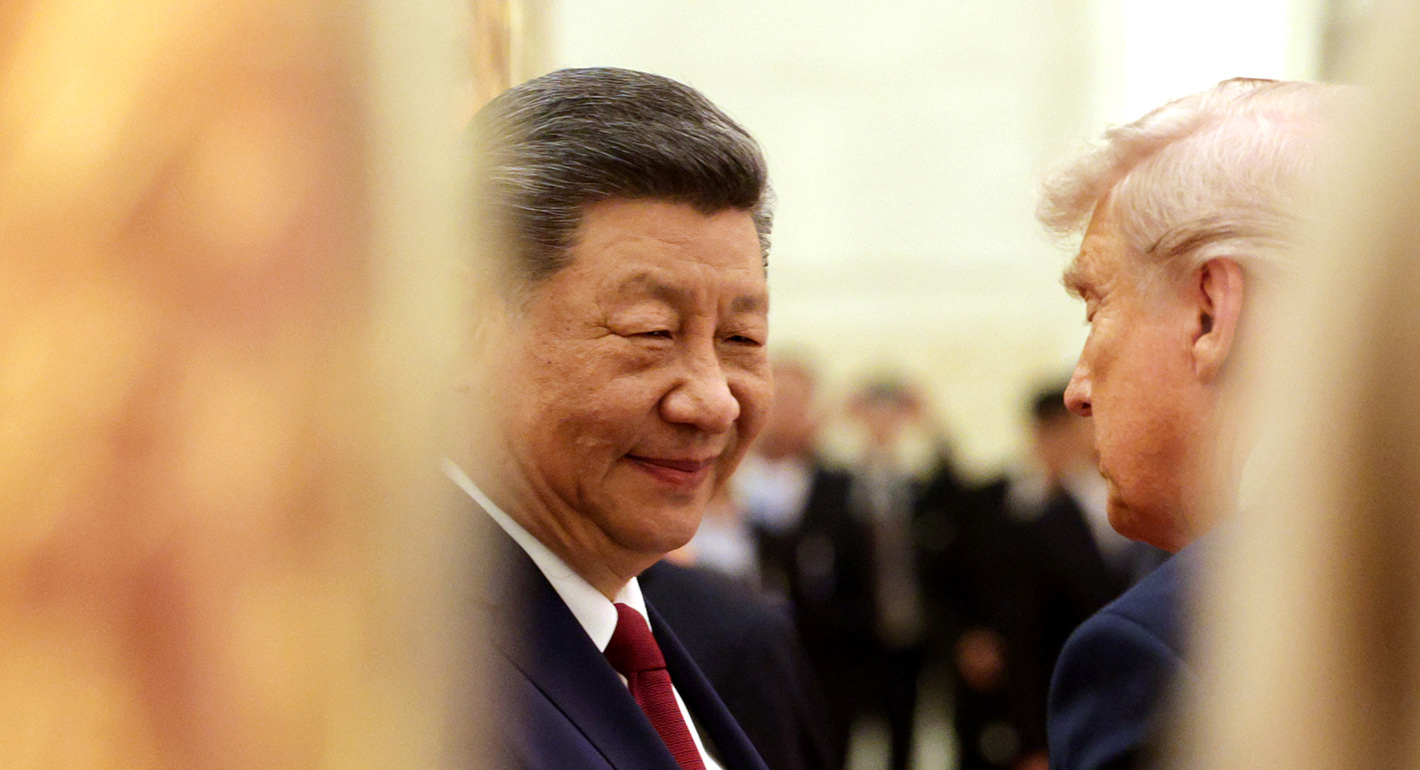
The U.S.-China Summit produced a welcome commitment to build a constructive, strategically stable relationship. However, the United States has a full agenda, including the USMCA review beginning this week, that will likely target Chinese practices of concern. If China views these efforts as inconsistent with the agreements reached in Beijing, it may slow or halt progress in response.

Barbara Weisel

Between the United States’ market-driven approach and China's state-led industrial strategy, Europe is reckoning with how it can remain competitive in the global economy. But is Europe in danger of becoming a U.S. or China colony?


Noah Barkin, Anu Bradford
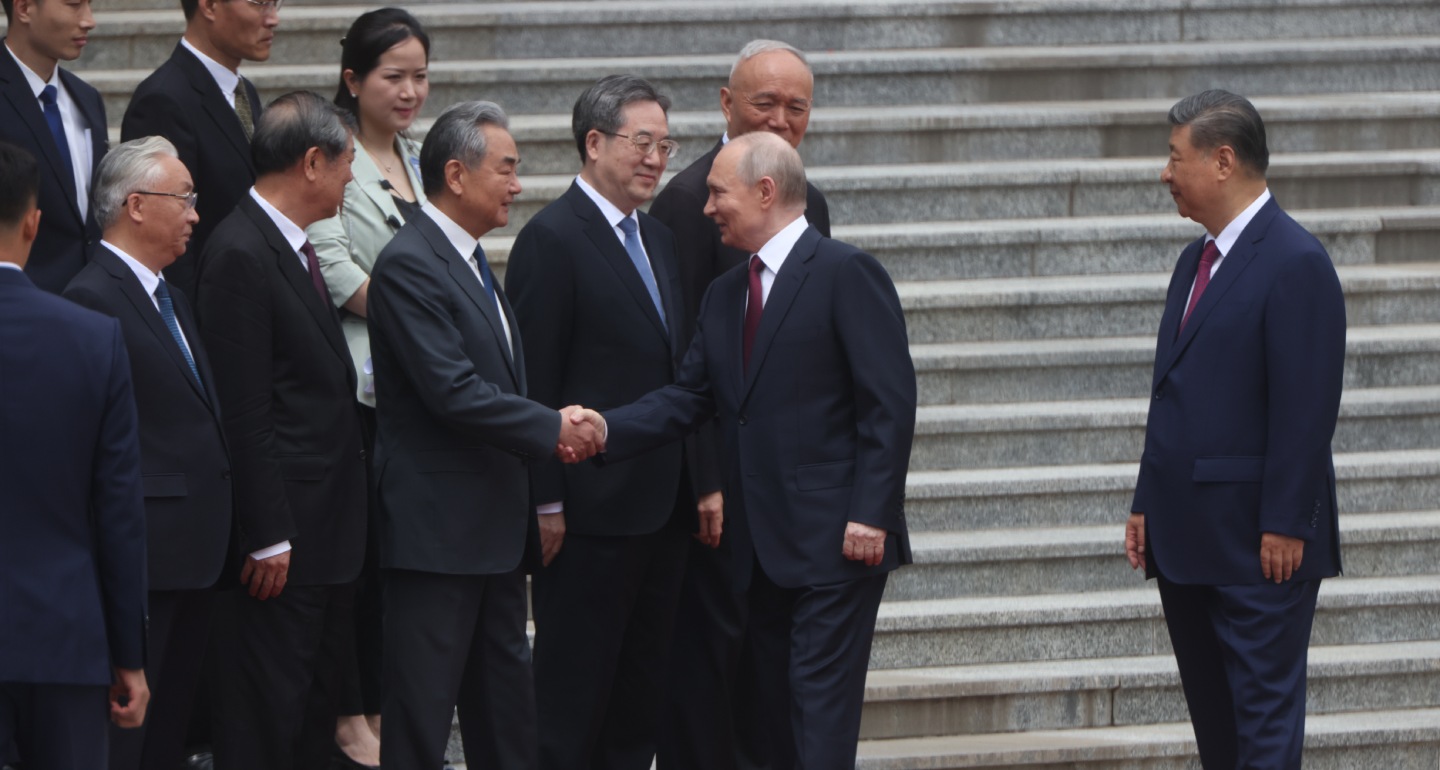
With no key agreement signed on the Power of Siberia 2 gas pipeline, there is a risk that the window of opportunity for Russia will close if Chinese power generation becomes so green that new gas sources are no longer of any interest to Beijing.

Alexander Gabuev